


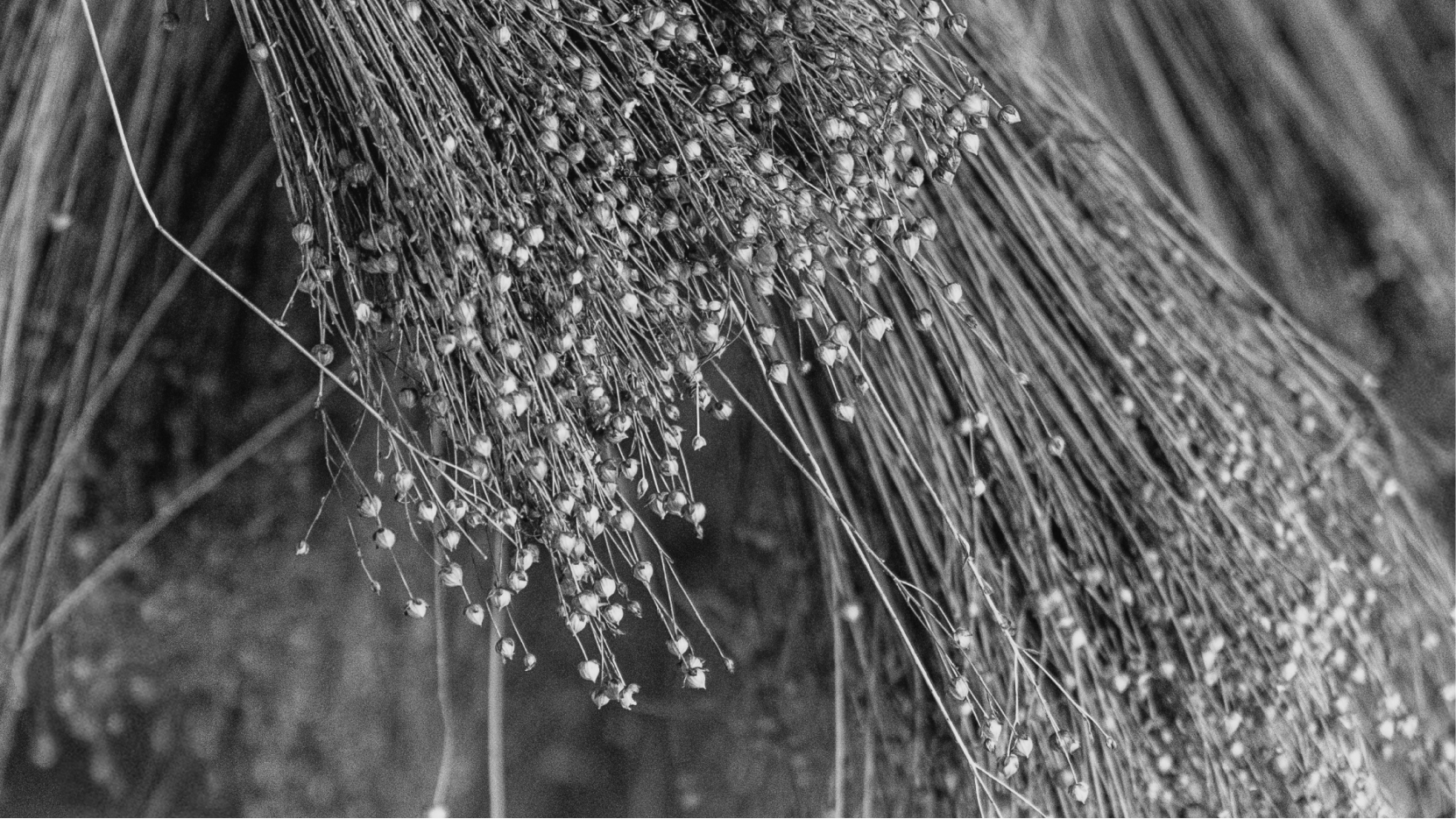
Linen has been cultivated for millennia for its freshness and durability. Its hollow fibres absorb and release moisture quickly:
they can absorb up to 20% of their own weight in water without feeling damp to the touch. This is why a linen piece tends to stay cool
and dry even on the hottest days. There is also a little-known detail: when in contact with water, linen fibre increases its resistance rather than weakening.
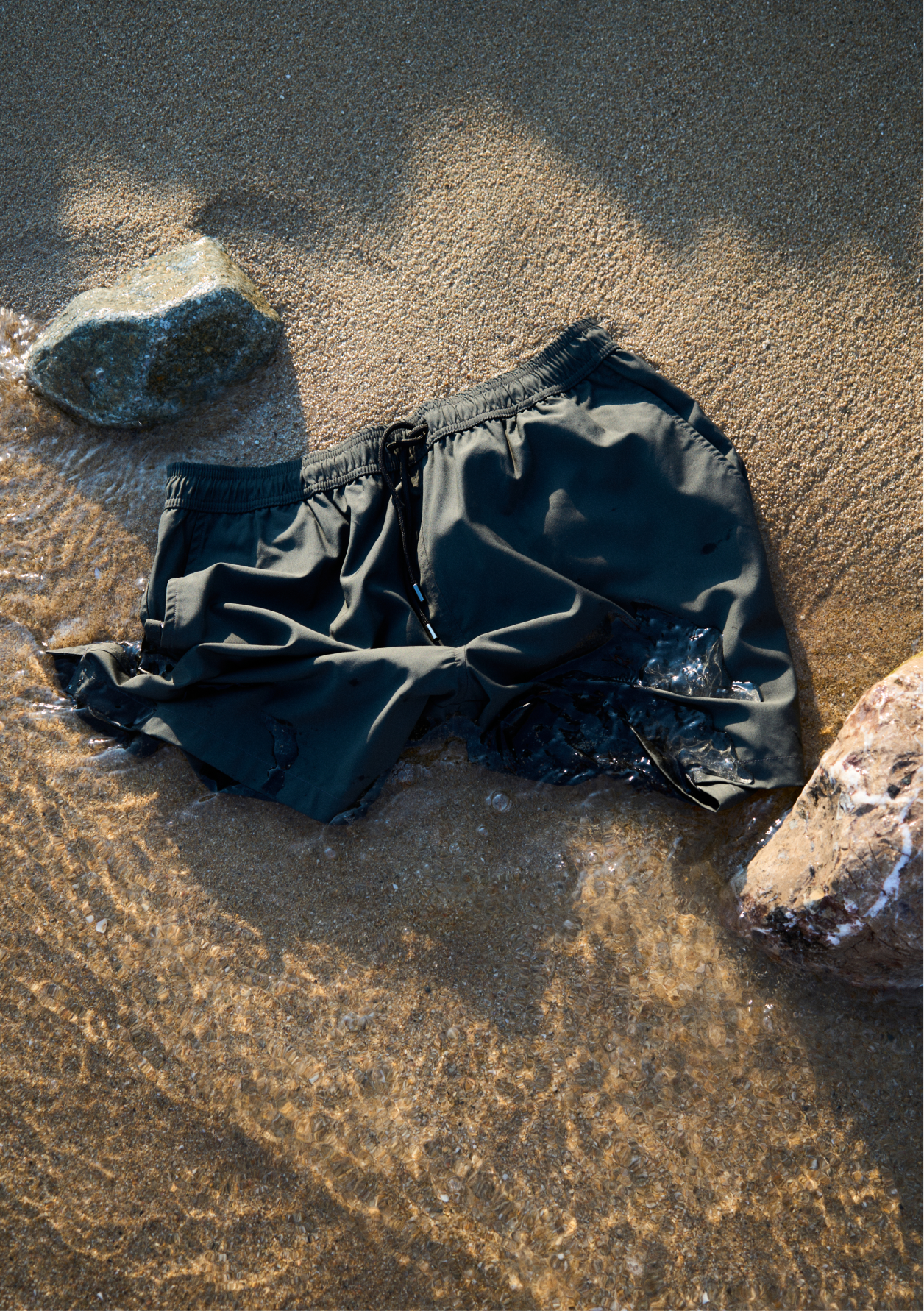
It is no coincidence that, historically, it was used for sails and ropes on boats. Linen is also a naturally breathable, hypoallergenic and durable fibre. Compared to other widely used fibres, such as conventional cotton, the linen plant generally requires far less water to grow and is cultivated in Europe almost exclusively thanks to natural rainfall, without the need for intensive irrigation. This contributes to a more contained environmental impact in terms of water consumption.
The true strength of linen lies in its adaptability.
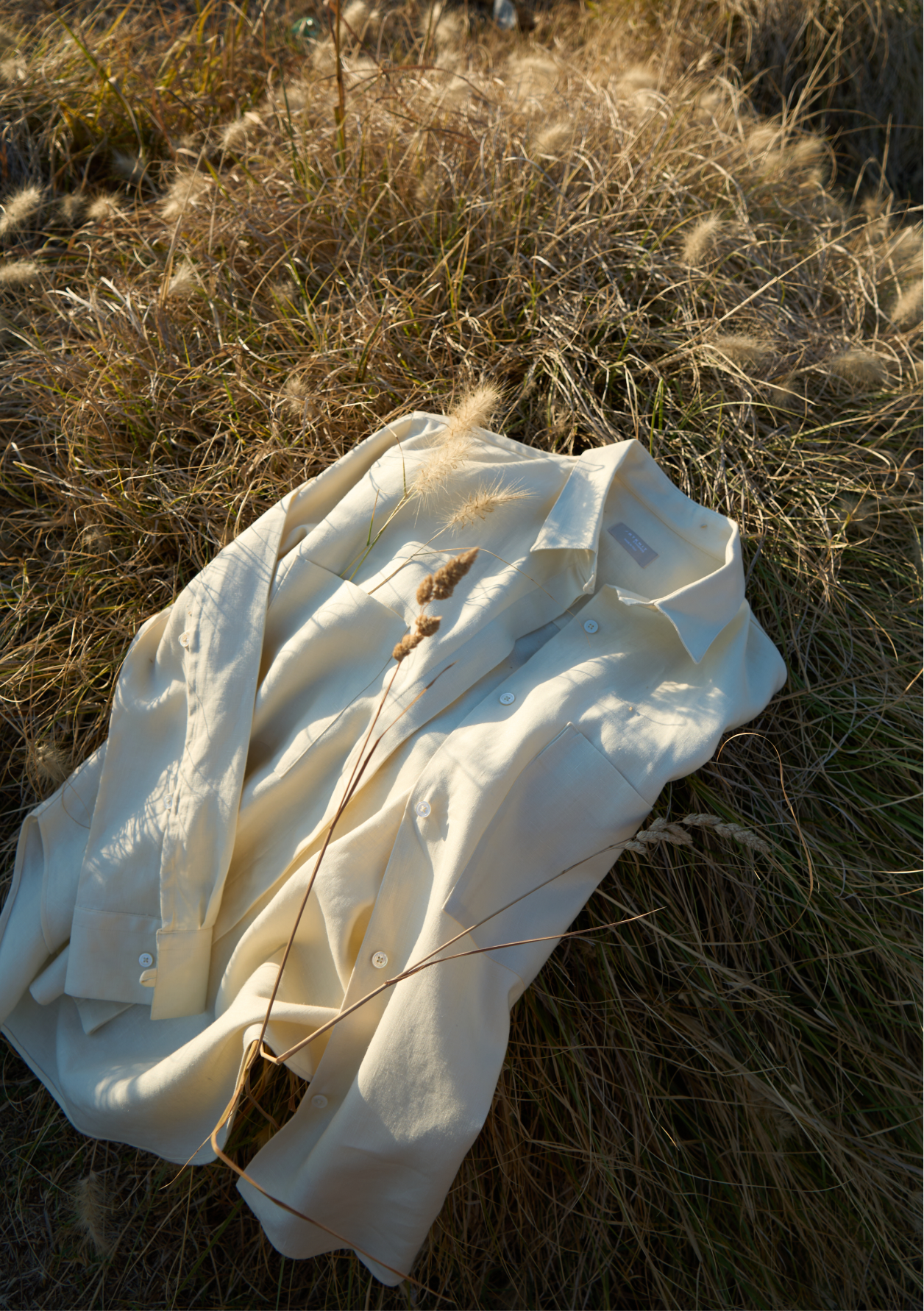
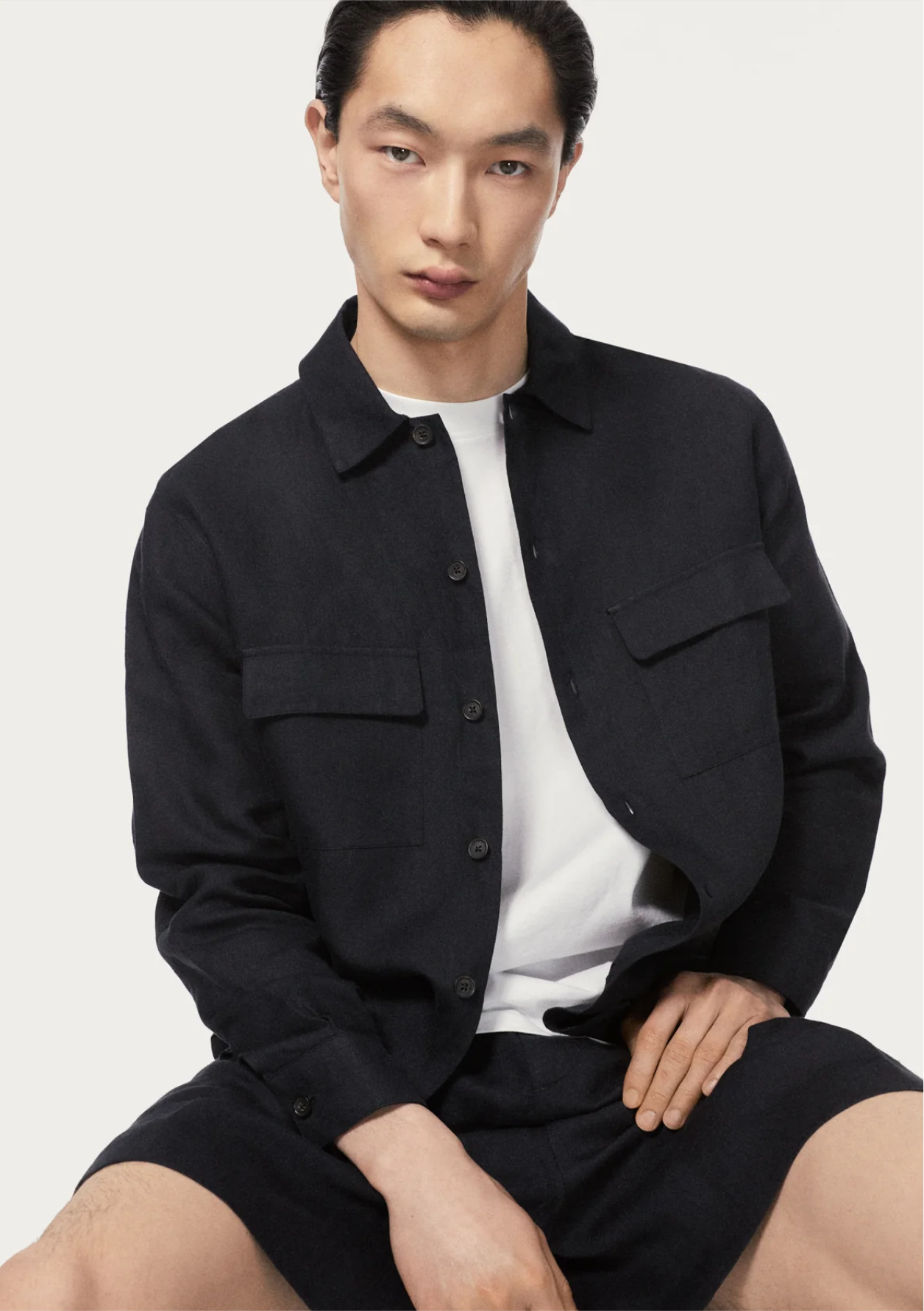
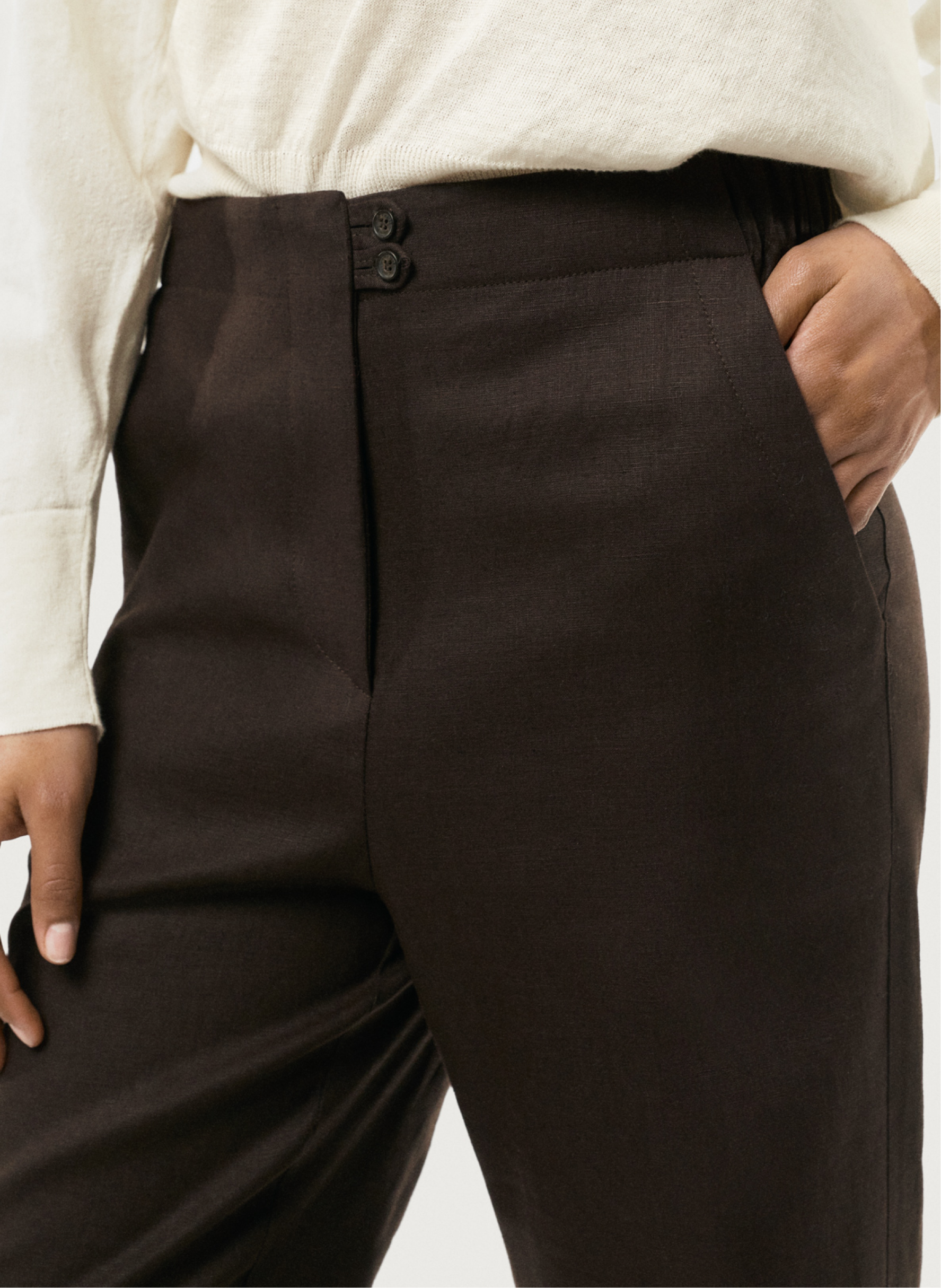
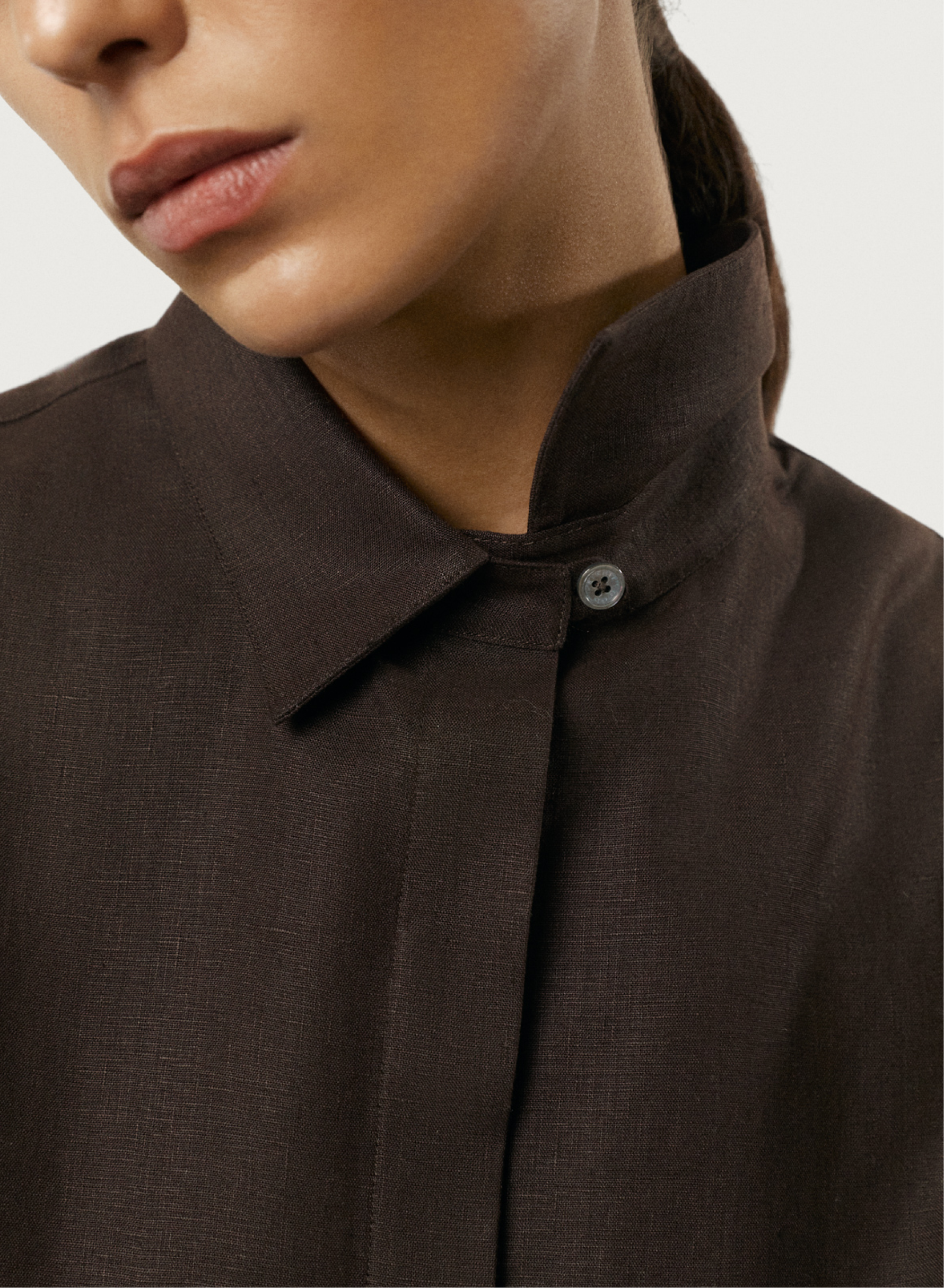
Depending on how it is spun and processed, it can become a light and impalpable fabric, perfect for a summer shirt, or take on a more substantial and defined structure, ideal for trousers or an overshirt with a more decisive construction.
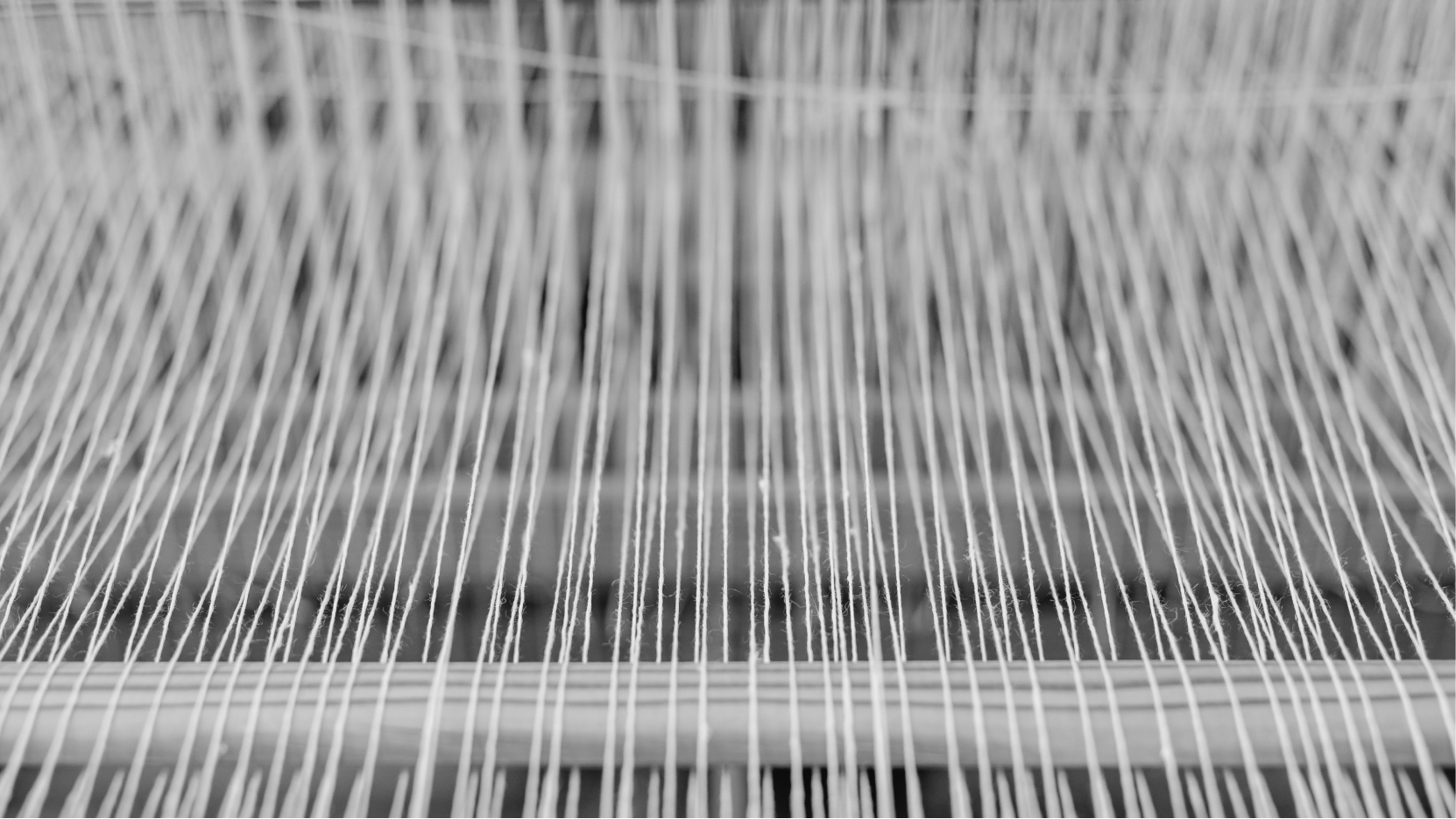
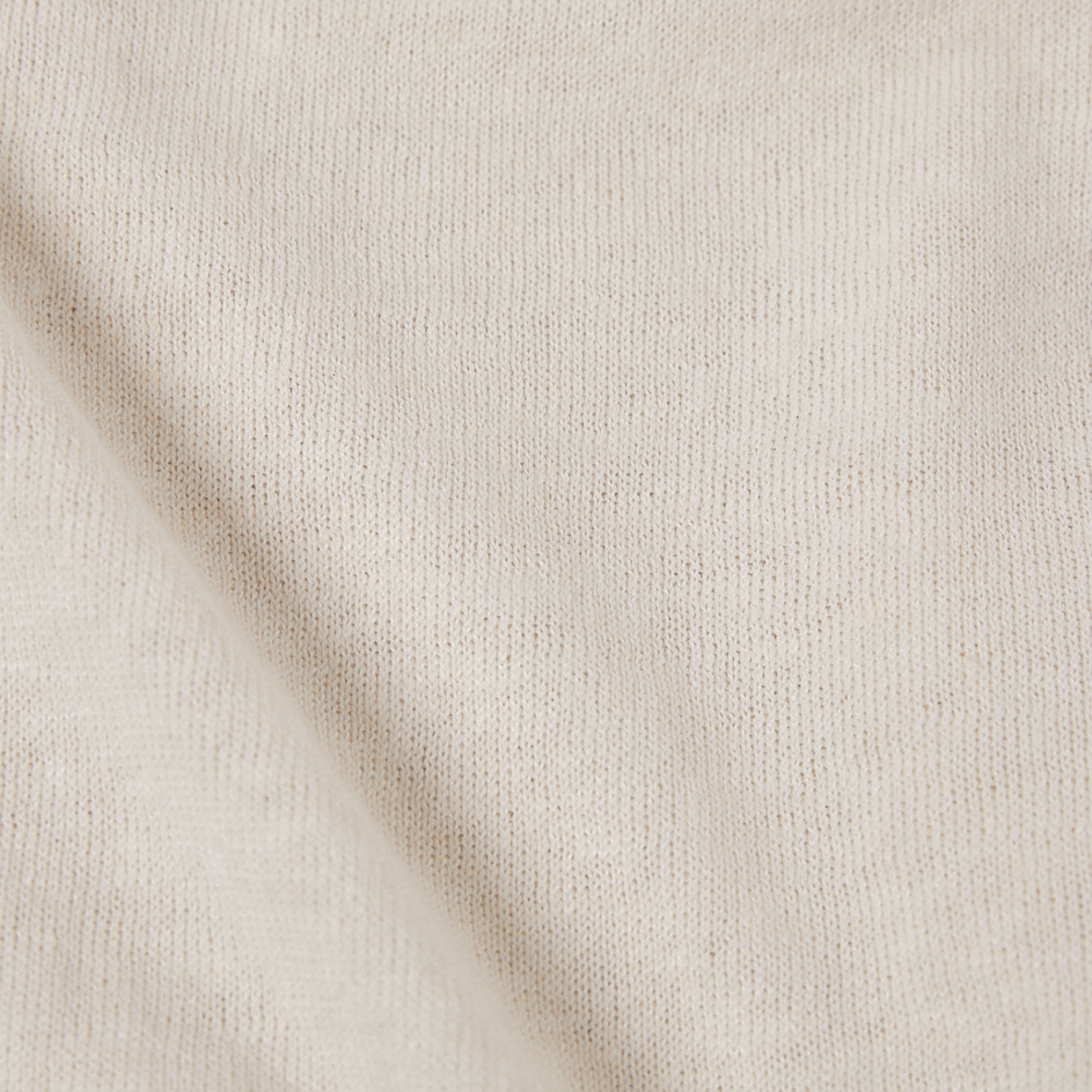
It can be woven on a loom or knitted, dyed or left natural to enhance its small surface irregularities - those slight slubs that are the hallmark of an authentic fibre.
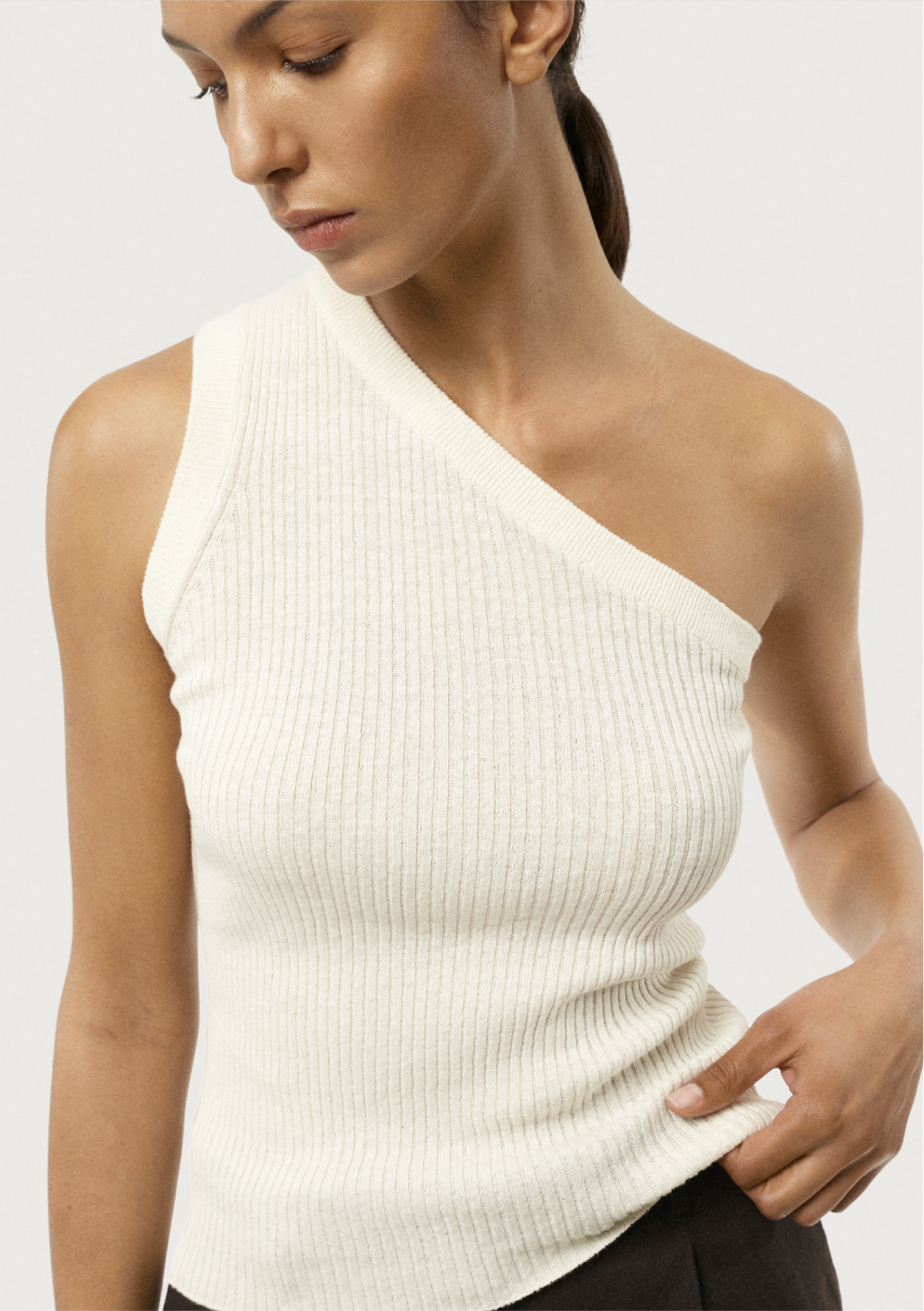
Even the yarn gauge completely changes the result: finer fibres produce almost transparent fabrics, while thicker yarns yield more tactile and structured weaves. It is this versatility that makes linen suitable for both minimalist and more structured pieces.
The personality of linen is born from the long journey that takes the fibre from plant to finished piece.
After harvesting, the stalks are retted, separated, spun and finally transformed into fabric or knitwear. Each step modifies the character of the material: it can make it lighter, more compact, more luminous or more tactile. Linen cultivation also follows particularly efficient agricultural practices: fields are rotated periodically and the plant generates very little waste, as seeds and woody residues can also be put to other uses. It is in this transformation process that the expertise of those who have worked this fibre for generations is measured.
At Artknit, we work exclusively with OEKO-TEX®, OCS and European Flax® certified linen. In our collection you can find both 100% Linen fabrics and Linen & Organic Cotton knitwear, a combination that unites the freshness of linen with the softness of cotton.
Every piece is born from a short and traceable Supply Chain, produced by Italian artisan workshops. On each product page, you can trace the origin of the raw material and the partners who took part in the creation of the chosen piece.
Choosing linen means choosing a natural, durable material that is more easily biodegradable than synthetic fibres.
A high-quality linen piece can accompany many summers and often gains character with use: the hand becomes softer, the surface more lived-in, the fit more personal. It is a fibre that combines everyday comfort, material quality and a more conscious approach to the wardrobe, while maintaining the essential elegance that has always distinguished it.
THE LINEN SELECTION
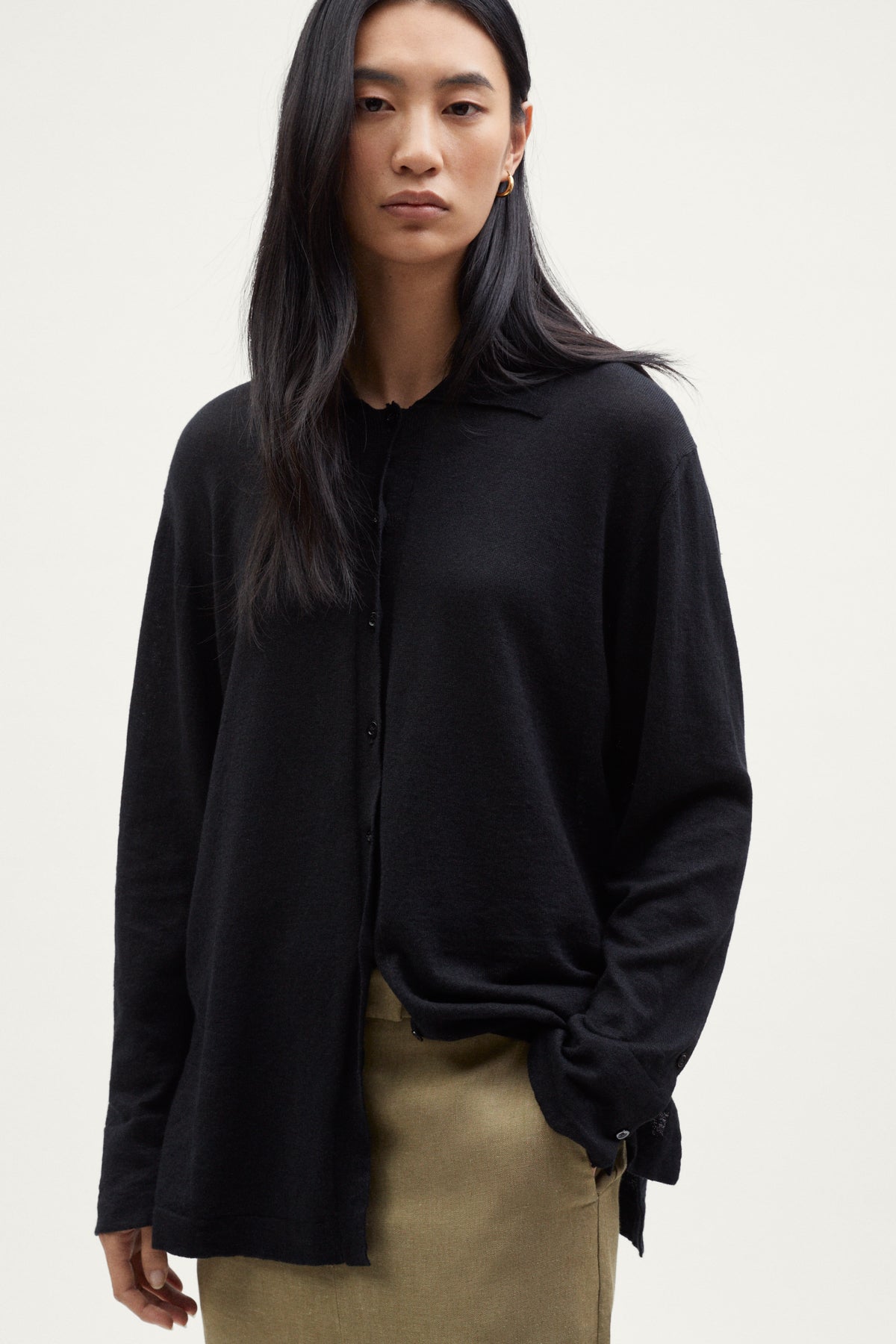
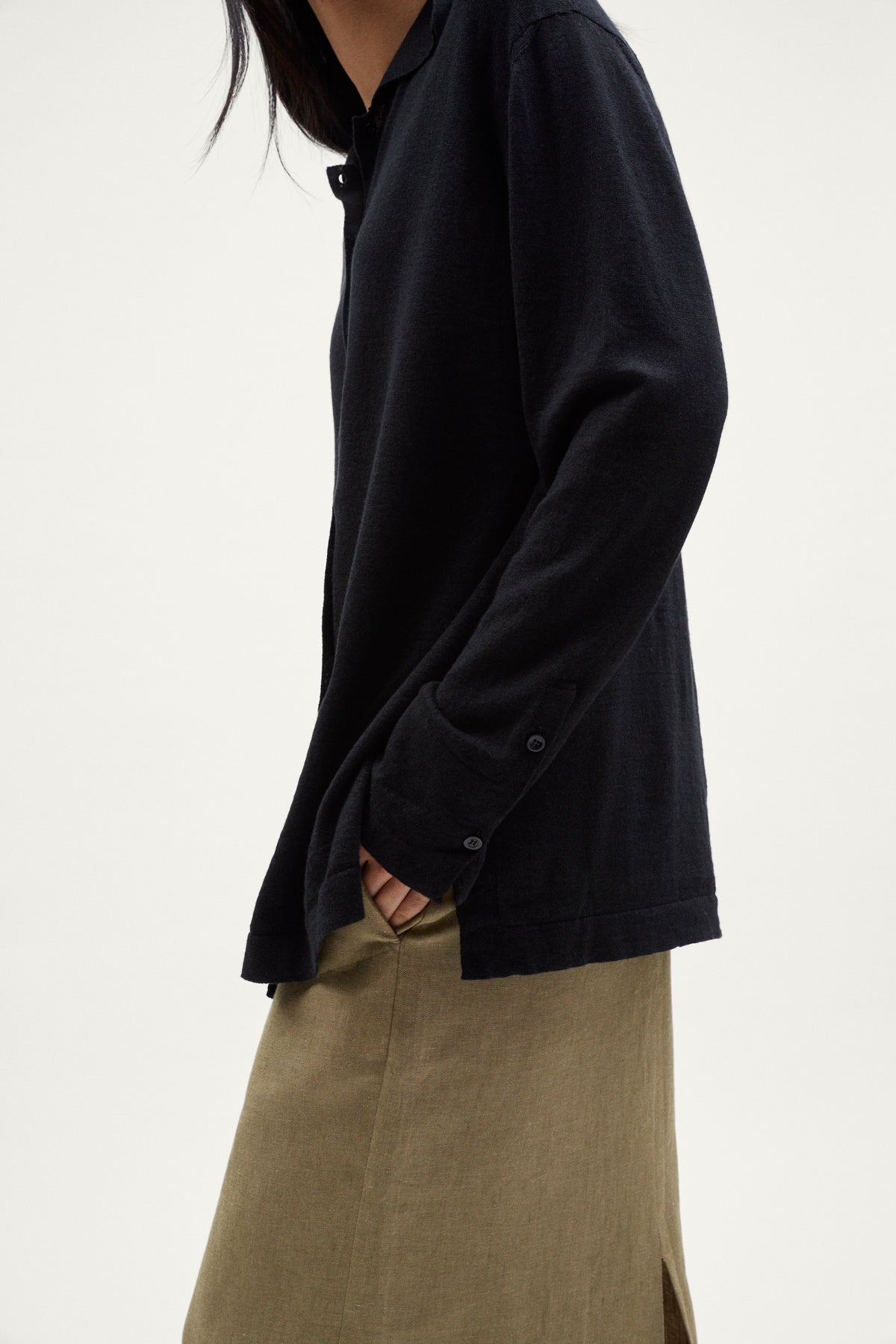
LINEN COTTON
The Linen Cotton Long Sleeve Shirt

LINEN COTTON
The Linen Cotton Knit T-Shirt

LINEN COTTON
The Linen Cotton Knit Shirt

LINEN
The Linen Twill Relaxed Overshirt

LINEN COTTON
The Linen Cotton Ribbed Shirt

LINEN COTTON
The Linen Cotton Short Sleeve Polo

LINEN COTTON
The Linen Cotton Shawl Collar Polo

LINEN COTTON
The Linen Cotton Long Sleeve ShirtSources
Alliance for European Flax-Linen and Hemp (CELC)
SLM Italia
Chimica-online
European Flax®
OEKO-TEX®
Organic Content Standard (OCS)

WORLDWIDE SHIPPING AND EASY RETURNS
Shipping is free within the EU for orders over €250. Size exchanges are free in the EU, and returns are quick and easy, with our customer service ready to assist you.

ORDER ONLINE AND PICK UP YOUR ORDER
Choose between in-store pickup or InPost 24/7 Locker & Pickup Points at checkout, and collect your order whenever and wherever it suits you best with no shipping costs for in-store pickup.

PAY A LITTLE AT A TIME
You can pay directly from our website in three monthly installments without interest, by selecting Scalapay at checkout and creating an account in just two minutes.

DIGITAL PRODUCT PASSPORT
You can always know who crafted your piece and where the raw material came from by going through its journey on every product page.

THE REPAIR PROGRAM
The Repair Program aims to make your Artknit’s pieces look as good as new, in order to reduce waste and extend your knits’ lifecycle.